


Employee turnover may feel like it has stabilized since the peak of the Great Resignation, but Gallup’s latest Employee Retention and Attraction Indicator shows that risk is still widespread and evolving. According to Gallup:
- 51% of U.S. employees are either actively looking for a new job or watching for opportunities
- Only 49% say they are not actively seeking or open to new opportunities
In other words, nearly half the workforce is firmly rooted, while the other half remains a potential flight risk. For employers, this signals a major shift. Turnover is no longer just about who leaves. It is about who is thinking about leaving.
A Cooling Labor Market Isn’t Fixing Retention
At first glance, it may seem like retention is improving. Employees are quitting at lower rates than in recent years, and job openings have moderated. However, Gallup’s data reveals a more nuanced reality. While fewer employees may be leaving immediately, long-term commitment has weakened significantly. Employees are staying put longer, but many are doing so cautiously, waiting for the right opportunity rather than feeling fully engaged. Gallup’s research highlights that:
- Employee satisfaction and engagement have declined from recent highs
- Workers report feeling less connected to their organization’s mission and future
- The percentage of employees who feel it is a “great time to find a quality job” has dropped, influencing behavior but not intent
This creates a workforce that appears stable on the surface but is increasingly open to change.
Intent to Leave Is the New Retention Risk
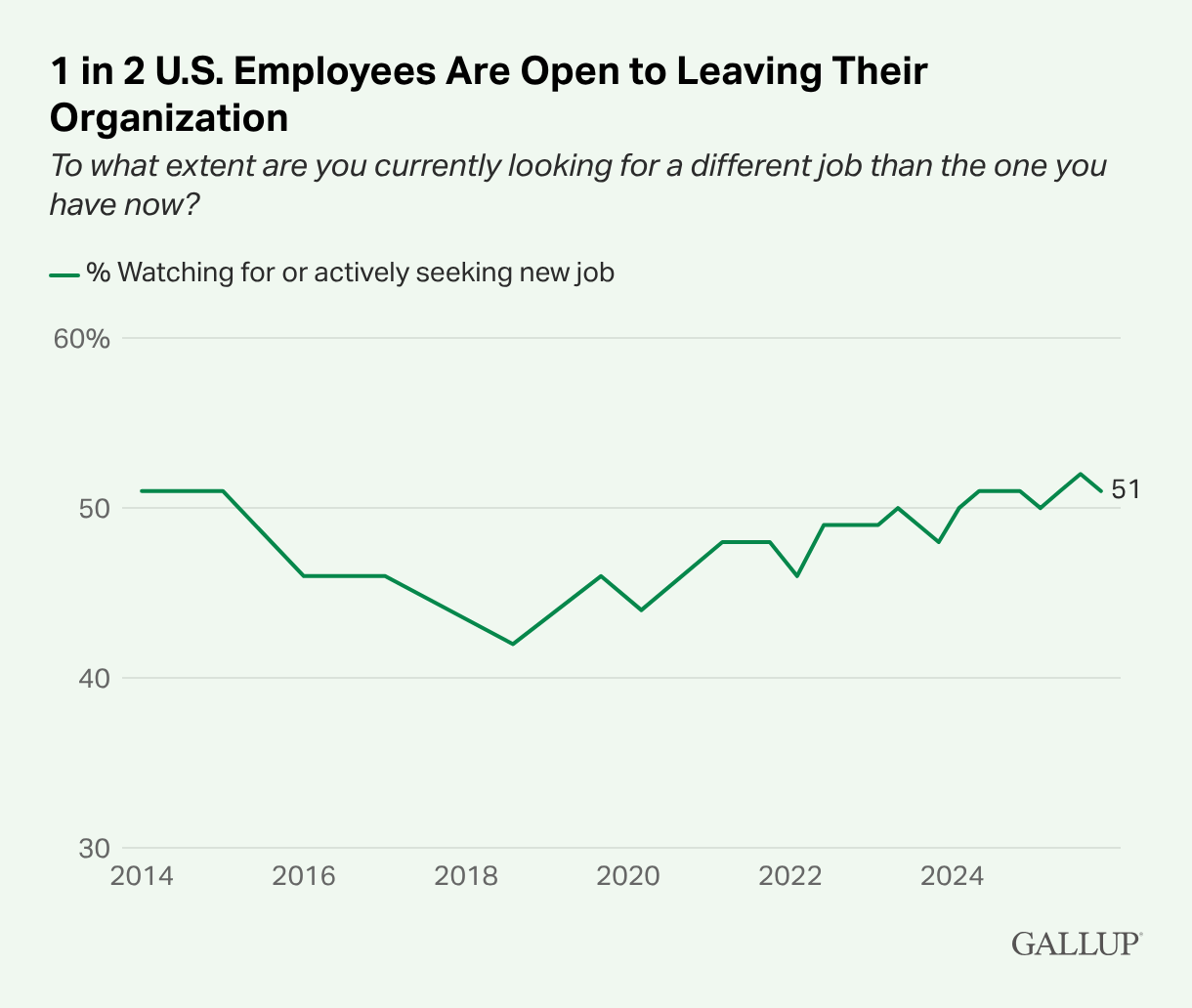
One of the most important takeaways from the report is the distinction between behavior and intent. Employees are not always acting on their dissatisfaction immediately. Instead, many fall into two key groups:
- Those who are actively job searching
- Those who are passively watching for opportunities
Together, these groups make up the 51% of employees open to leaving. This “watching” group is especially important. These employees may still be performing well and showing up consistently, but they are mentally disengaged and ready to move when the right role appears. For employers, this means traditional retention metrics like turnover rate may not tell the full story.
What’s Driving Employees to Look Elsewhere
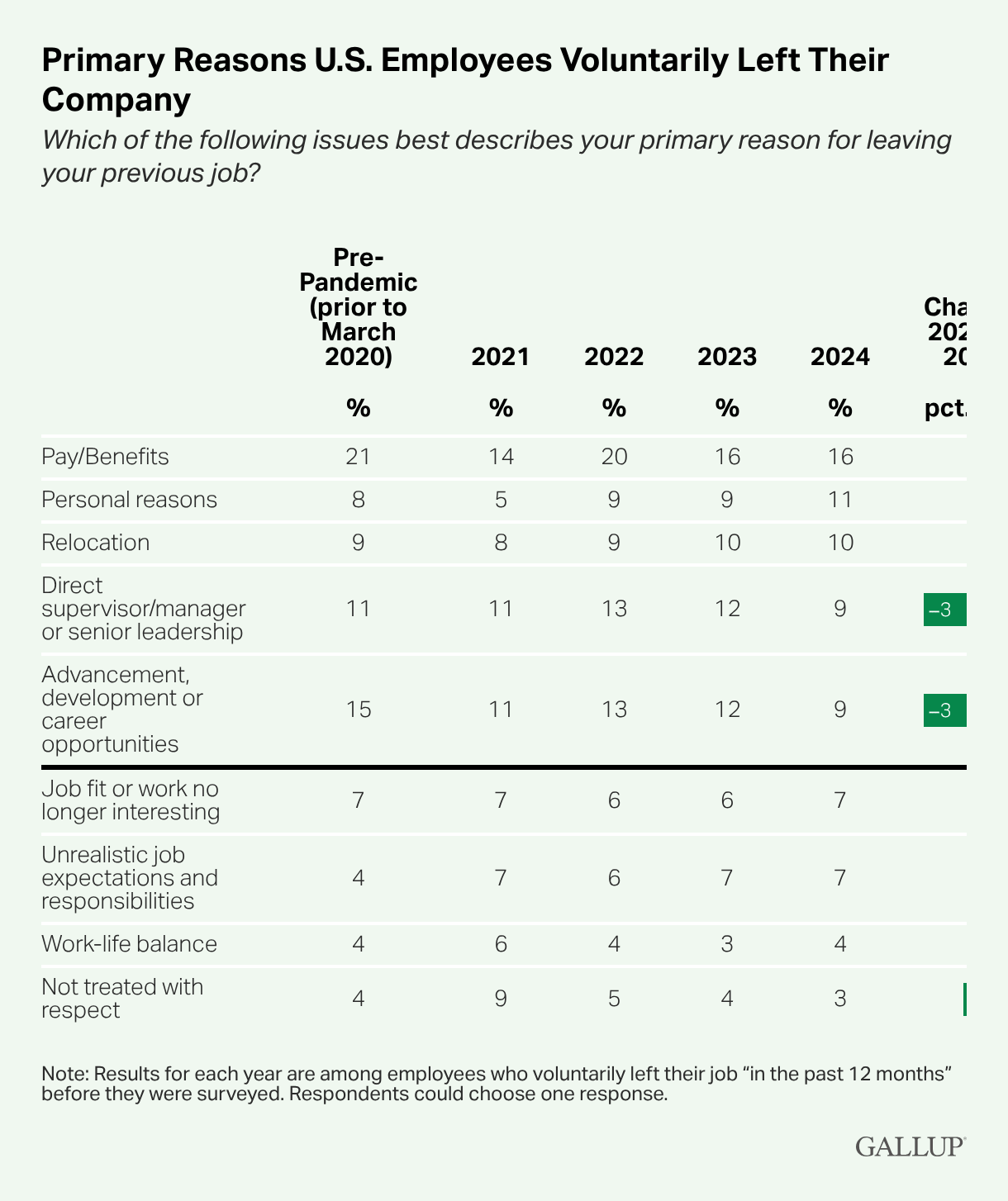
Gallup’s findings reinforce that employees are evaluating their workplace experience holistically. While pay remains important, other factors are increasingly influencing decisions. Employees are seeking roles that offer stability, purpose, and growth. They want to understand how their work contributes to larger goals and whether there is a clear path forward. Manager relationships continue to play a central role. When employees do not feel supported, recognized, or developed, they are far more likely to explore other opportunities. Additionally, shifting expectations around flexibility and work-life balance remain key drivers as employees prioritize roles that align with both their personal and professional needs.
The Disconnect Between Employers and Employees
Despite these clear signals, many organizations are still relying on reactive approaches to retention. Gallup’s broader research shows that employees often do not communicate dissatisfaction directly before leaving, and managers may overestimate how engaged their teams actually are. Many organizations continue to rely on exit interviews instead of proactive conversations, which creates a gap where employees quietly disengage while employers assume stability. By the time a resignation happens, the opportunity to retain that employee has already passed.
Retention and Attraction Are Now Interconnected
Gallup’s indicator also reinforces that retention and attraction are deeply connected. When employees are disengaged or open to leaving, it affects more than internal stability. Organizations experiencing higher disengagement may see reduced employee advocacy, fewer referrals, and a weaker employer brand. This can lead to longer hiring cycles and increased recruiting costs. On the other hand, companies that invest in engagement and retention often strengthen their ability to attract talent because their employees become advocates for the organization.
What Employers Should Do Differently
Gallup’s data points to a clear need for earlier and more intentional action. Organizations that successfully reduce turnover risk focus on understanding employee intent before it becomes action. This starts with consistent, meaningful conversations that go beyond day-to-day tasks and address long-term goals, challenges, and engagement. It also requires a closer look at workforce structure. When teams are understaffed or misaligned, employees are more likely to experience burnout and begin exploring other options. Finally, hiring strategies must evolve. Bringing in candidates who align with both the role and the organization’s culture improves retention outcomes and reduces the likelihood of early turnover.
How Eastridge Helps Employers Navigate Retention Risk
At Eastridge Workforce Solutions, we help employers address retention challenges at their source. Our approach focuses on building stronger, more stable teams through strategic staffing and compliance-driven hiring. By ensuring organizations have the right talent in place at the right time, we help reduce the workload pressures and misalignment that often lead to disengagement. We also prioritize candidate quality and fit, helping employers make hiring decisions that support long-term retention, not just immediate needs. In a labor market where 51% of employees are open to new opportunities, having a proactive staffing strategy is essential.
The Bottom Line
Gallup’s latest data makes one thing clear. The workforce may look stable, but the underlying risk is high.
- 51% of employees are open to leaving
- Engagement and long-term commitment are declining
- Many employees are staying, but not fully invested
Retention today is about more than preventing resignations. It is about recognizing intent early and taking action before employees begin to disengage. Organizations that prioritize communication, workforce planning, and strategic hiring will be better positioned to retain their talent and compete in an increasingly uncertain labor market.